Expanding Fault Lines in Legal Technology
This article was originally published by the American Bar Association’s Law Practice Division’s publication, Law Technology Today in The Professional Infrastructure Series — Article I.
This article is the first in a four-part series examining what may be a growing fracture within legal technology itself: a separation between technologies optimized primarily for convenience and scale, and technologies optimized for professional manageability, accountability, and control.
For more than two decades, the legal profession has been engaged in an accelerating technological transition. What began as relatively straightforward digitization—word processing, email, searchable databases, and electronic filing—evolved into workflow automation, cloud collaboration, software-as-a-service platforms, and now increasingly AI-driven systems capable of drafting, summarizing, recommending, and even giving an appearance of reasoning.
Much of this evolution has been presented as inevitable progress. Faster systems. Smarter systems. More integrated systems. More automated systems.
And in many respects, that progress has been real. Legal technology has unquestionably improved access to information, reduced administrative burden, accelerated document production, improved searchability, enabled remote collaboration, and expanded the operational capabilities of firms of every size.
But alongside those advances, another development has quietly emerged — one less discussed, but potentially more important. The legal profession is becoming increasingly dependent on systems it does not fully control.
This is not an argument against artificial intelligence, cloud systems, automation, or technological modernization. Nor is it a defense of nostalgia or institutional resistance. The legal profession has always evolved alongside technology, and it should continue to do so.
The issue is not whether technology should assist professionals; it’s whether professionals remain capable of meaningfully controlling the systems on which they increasingly rely. That distinction may become one of the defining professional questions of the next decade.
How Automation Became So Heavy
Modern legal automation did not begin with AI. It began with structure.
The earliest generations of document automation systems emerged from a relatively straightforward professional problem: legal documents contain large amounts of repeated structure, repeated language, repeated logic, and repeated information. Firms handling high volumes of transactional or procedural work needed ways to standardize drafting, reduce repetitive labor, and minimize clerical inconsistency.
The solution was enterprise automation.
These systems were powerful, often extraordinarily so. They could generate highly sophisticated documents, assemble packages of forms, manage conditional language, and standardize work across large organizations. For major firms and institutional users, they represented a substantial operational advantage.
But the defining characteristic of enterprise legal automation was not merely capability. It was institutional weight.
The traditional enterprise model often assumed dedicated implementation cycles, specialized consultants, centralized infrastructure, and long-term organizational commitment. These systems frequently mirrored the operational assumptions of the broader enterprise software era of the 1990s and early 2000s: large organizations, centralized IT governance, expensive deployments, and highly structured workflows, which many of today’s tech vendors continue to carry.
For many firms, particularly smaller and mid-sized practices, the burden increasingly became part of the problem.
Over time, the market’s dissatisfaction was not necessarily directed at automation itself. Firms still wanted efficiency, standardization, and scalability. What they increasingly resisted was friction: implementation friction, infrastructure friction, consultant dependence, technical complexity, and operational heaviness.
The market did not abandon automation. In many ways, it abandoned infrastructure fatigue.
The Rise of Convenience Infrastructure
Into that environment came the modern cloud workflow model.
Browser-based systems promised rapid deployment, simplified onboarding, lower technical barriers, integrated collaboration, subscription accessibility, and increasingly broad workflow ecosystems. The new generation of platforms emphasized ease rather than institutional complexity. The appeal was obvious.
Organizations no longer needed to build or maintain large internal systems merely to automate routine workflows. Firms could subscribe rather than deploy. Infrastructure became abstracted. Complexity became externalized. This shift was not irrational. In many contexts, it represented genuine progress. But it also quietly changed the nature of professional dependence.
Historically, firms operated systems they largely understood, controlled, and managed internally. Increasingly, however, they work within ecosystems built on external infrastructure, continuous software updates, cloud processing layers, integrated services, and operational chains extending far beyond the firm itself. As those layers expand, older priorities such as local control, auditability, infrastructure independence, and professional manageability become harder to preserve.
The Arrival of AI-centric Systems
The newest phase of legal technology evolution has accelerated this transition exponentially.
In just two years artificial intelligence systems have been promoted from research tools to functions once associated primarily with human reasoning: summarization, analysis, organization, recommendation, drafting, and even argument formation.
Again, many of these tools are genuinely useful. AI-assisted research can dramatically accelerate information review. Summarization tools can reduce administrative overhead. Language models can help professionals process enormous quantities of material more efficiently than ever before. The issue is not whether these systems possess utility.
The issue is the degree to which professional responsibility is being delegated to systems that are probabilistic, opaque, and difficult to meaningfully supervise. Recent sanctions involving fabricated authority have made the risk visible.
For years, AI in legal environments was largely discussed as an assistive technology — a research aide, a productivity enhancer, or a support layer operating under direct human supervision. Increasingly, however, the profession appears to be moving from “AI as supervised assistant” toward “AI as operational participant.”
That transition is profound because professional systems historically depended not merely on outcomes, but on inspectability. Lawyers supervised junior attorneys, paralegals, clerks, and assistants whose reasoning, sources, and work processes could ultimately be examined and understood.
Probabilistic systems change that relationship.
A language model may generate persuasive language without exposing the reasoning structure behind it. An AI-generated draft may appear authoritative while embedding subtle inaccuracies, unsupported assumptions, fabricated citations, or unverifiable conclusions. Even when outputs appear convincing, professionals may remain unable to fully inspect the internal processes that produced them.
This creates a new category of professional dependence: dependence not merely on software, but on abstraction itself.
As the Boundaries Disappear
Public discussions about cloud systems and AI often focus on visible events: outages, hallucinated citations, vendor breaches, ransomware attacks, compromised accounts, or sanctions involving fabricated authority. These events matter. But they may not be the deepest issue. The deeper issue is dependence.
More specifically, modern firms increasingly depend on external infrastructure, vendors, connectivity, cloud operations, and AI systems in ways that can be difficult to fully see or manage.
Modern professional systems are becoming extraordinarily layered. Firms increasingly operate within environments where the boundaries between internal systems, cloud infrastructure, AI processing, and third-party services are becoming progressively more difficult to distinguish.
Control boundaries are dissolving.
And importantly, this transition is occurring extraordinarily quickly.
The Economic Accelerators Driving Legal Technology
Part of the speed of this transition is technological. Part of it is economic.
Law firms face growing pressure to reduce costs, increase throughput, respond to client resistance over fees, and deliver work more quickly. At the same time, legal technology vendors face their own pressures to expand markets, justify subscription models, attract investment, and position themselves around artificial intelligence.
Those pressures now reinforce each other. Firms want efficiency and scale. Vendors want adoption and recurring revenue. AI companies, after enormous infrastructure investment, need professional markets to absorb increasingly capable systems.
None of these incentives is inherently improper. But together they create a powerful acceleration effect. Technology is not merely being adopted because it is available; it is being pushed forward by converging economic expectations.
That matters because professional responsibility does not move at the same speed as software deployment. Duties of competence, confidentiality, supervision, accountability, and judgment require time, structure, and institutional understanding. When economic pressure accelerates technology faster than firms can meaningfully manage it, speed itself becomes a professional concern.
Convenience Infrastructure Versus Professional Infrastructure
One way to understand the current fracture in legal technology is to distinguish between two increasingly different optimization models.
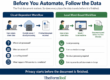
Convenience infrastructure optimizes for accessibility, integration, speed, abstraction, synchronization, and frictionless use.
Professional infrastructure optimizes for accountability, manageability, inspectability, continuity, reproducibility, and professional control.
Neither model is inherently illegitimate, but they are not identical. And different legal tasks may tolerate different levels of abstraction and uncertainty.
A marketing workflow may tolerate substantial automation variability. General research assistance may tolerate probabilistic support. Privileged client drafting, court filings, and formal legal analysis may tolerate far less.
This distinction may become increasingly important as firms attempt to determine which technologies belong in which professional environments. Because not every professional task can tolerate substituting probabilistic infrastructure for professional judgment.
Driving Versus Riding
Perhaps the clearest way to understand the present transition is this: the profession increasingly risks becoming a passenger inside systems it neither fully controls nor fully understands.
That does not mean the systems lack value. Nor does it mean professionals should reject technological progress.
But it does raise a serious question: are professionals still driving their operational systems, or are they increasingly along for the ride?
For decades, legal technology discussions focused primarily on capability: What can the systems do?
The emerging question may be different: Can professionals meaningfully manage the rapidly expanding systems on which they now depend?
That distinction may ultimately matter more.
The Beginning of a Larger Discussion
The legal technology market no longer appears to be converging toward a single dominant model.
Instead, it may be fracturing into competing philosophies: enterprise control, cloud convenience, AI abstraction, and professionally managed systems designed around accountability and operational sovereignty.
This series will explore those competing models in greater depth.
The next article will examine the distinction between deterministic and probabilistic systems, and why reproducibility, inspectability, and professional manageability may become increasingly important in an era of rapidly accelerating abstraction.
The future of professional technology may depend less on raw capability than on whether professionals remain capable of meaningfully directing the systems on which they rely.
This article was originally published by the American Bar Association’s Law Practice Division’s blog, Law Technology Today in The Professional Infrastructure Series — Article I.